

Evaluating Fulfillment by Amazon (FBA) versus Fulfillment by Merchant (FBM) is no longer a simple calculation of shipping speed versus convenience. In 2026, Amazon expanded its fee matrix to include price-tiered fulfillment rates, a mandatory 3.5% fuel and logistics surcharge, granular Inbound Placement fees, and strict Low-Inventory-Level (LIL) penalties.
For e-commerce operators generating $1M to $10M+ across direct-to-consumer (DTC) and marketplace channels, choosing the wrong fulfillment model for specific catalog segments causes silent EBITDA erosion. A product that appears profitable in platform reports can quickly turn negative when cumulative storage, inbound placement, and return processing surcharges hit the ledger. This operational guide breaks down the financial mathematics, size-tier economics, and software architectures required to maximize net profit margins on Amazon.
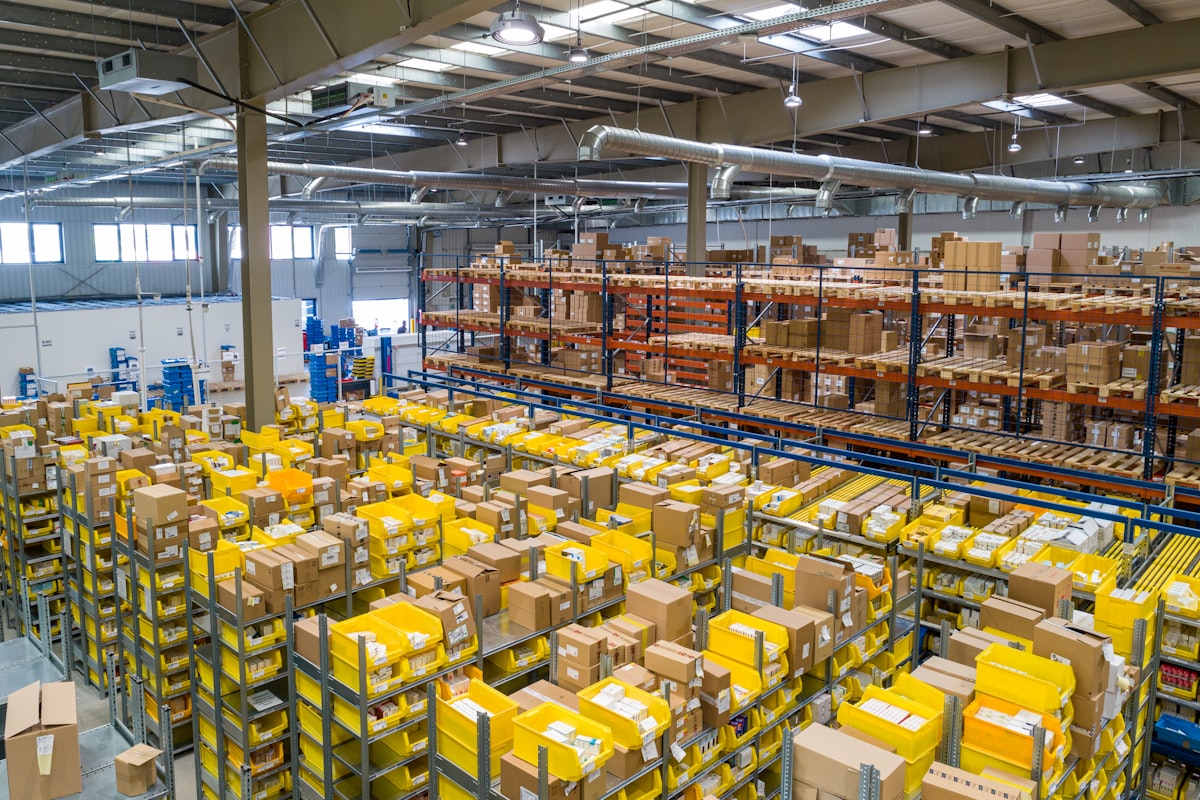
1. Master Comparison Matrix: FBA vs. FBM Margin Drivers
Review the technical and financial vectors below to determine how FBA and FBM impact net unit economics across different catalog profiles:
| Cost & Operational Vector | Fulfillment by Amazon (FBA) | Fulfillment by Merchant (FBM / 3PL) | Recommended Tech Stack |
|---|---|---|---|
| Base Fulfillment Structure | Price-Tiered ($<10, $10–$50, $>50) + 3.5% Fuel Surcharge | Contracted 3PL Pick/Pack + Direct Carrier Ground Rates | Jungle Scout → |
| Inbound Distribution Costs | Inbound Placement Fees ($0.21–$6.50/unit) unless split 5+ ways | Standard Bulk Pallet Freight to 3PL Warehouse | Celigo iPaaS → |
| Inventory Storage Rules | Aged surcharges kick in at 181 days ($0.30/unit or $6.90/cu ft) | Fixed Monthly Pallet/Cubic Storage (No aged penalty spikes) | ShipStation → |
| Buy Box & Organic Rank | Automatic Prime Badge; Algorithmic Priority | Requires SFP (Seller Fulfilled Prime) or higher ad spend to match CVR | Helium 10 → |
| Stock-out Risk & Penalties | Low-Inventory-Level Fee ($0.89–$1.11/unit) if < 28 days supply | Zero inventory supply penalties from Amazon | Shopify Plus → |
2. Anatomy of the 2026 Amazon FBA Fee Surcharge Stack
To model net profitability, operators must understand that FBA cost structures are no longer static single-line items. Multiple surcharges stack on top of base fulfillment rates depending on pricing, inventory speed, and inbound warehouse distribution choices.
A. Price-Tiered Fulfillment & The 3.5% Fuel Surcharge
Amazon evaluates fulfillment fees based on retail listing prices:
- Under $10 Tier (Low-Price FBA): Receives an average fee discount of $0.86 per unit to encourage low-ticket item listing velocity.
- $10 to $50 Tier: Represents standard base fulfillment fees.
- Over $50 Tier: Incurs higher base fulfillment rates (adding $0.31 to $0.51+ per unit). Pricing an item at $50.01 versus $49.99 can shift your fulfillment cost tier.
- The 3.5% Fuel & Logistics Surcharge: Applied automatically on top of all base FBA fulfillment fees across the US and Canada. A SKU with a $4.50 base fulfillment fee incurs an extra $0.16 fuel surcharge per unit.
B. Inbound Placement & Low-Inventory Surcharges
Inbound freight logistics carry additional compliance rules:
- Inbound Placement Service Fee: If you select “Minimal Shipment Splits” to send inventory to a single receiving node, Amazon charges $0.21 to $0.68+ per unit for standard items, and up to $6.50/unit for bulky items. You must select “Amazon-Optimized Splits” (shipping to 5+ regional centers) to waive this fee.
- Low-Inventory-Level (LIL) Penalty: Assessed at the individual FNSKU level when both 30-day and 90-day historical supply drop below 28 days. The fee ranges from $0.89 to $1.11 per unit sold until stock levels recover.
- 181-Day Aged Inventory Penalty: Storage surcharges trigger at 181 days (down from 271 days in legacy structures), charging $0.30 to $0.35 per unit or up to $6.90 per cubic foot monthly.

3. Worked Unit Economics Mathematical Model
To understand where FBM beats FBA, evaluate the worked unit economics for two distinct SKU profiles retailing on Amazon:
SKU Margin Breakdown: FBA vs. FBM (3PL)
Formula: Net Profit = Retail Price – Landed COGS – Amazon Referral Fee – Fulfillment Base – Fuel Surcharge – Inbound Freight – Storage
- Landed COGS: $7.50
- Amazon Referral Fee (15%): $5.70
- FBA Base Fulfillment Fee: $4.18
- FBA Fuel Surcharge (3.5%): $0.15
- Inbound Placement (Optimized Split): $0.00
- Monthly Storage Share: $0.12
- FBA Net Margin: $20.35 (53.5%)
- 3PL FBM Equivalent Cost: $8.20 (Pick/Pack + Ground)
- FBM Net Margin: $16.60 (43.7%)
Verdict: FBA Wins by 9.8% margin due to Amazon discounted small parcel shipping.
- Landed COGS: $18.00
- Amazon Referral Fee (15%): $11.25
- FBA Base Fulfillment Fee ($>50 Tier): $9.35
- FBA Fuel Surcharge (3.5%): $0.33
- Inbound Placement Surcharge: $0.55
- Monthly Storage Share: $0.85
- FBA Net Margin: $34.67 (46.2%)
- 3PL FBM Contract Cost: $10.50 (Regional Zone 3 Ground)
- FBM Net Margin: $35.25 (47.0%)
Verdict: FBM Wins by 0.8%+ margin, eliminating inbound placement fees and storage penalties.
4. Building a Hybrid Automated Routing Architecture
To protect margins against stock-outs and regional fee penalties, enterprise brands deploy a Hybrid FBA/FBM Failover Model. Managing this manually introduces risk; it must be orchestrated via an iPaaS connector (such as Celigo) linking Oracle NetSuite or Shopify Plus to Amazon Selling Partner API (SP-API).
Automated Hybrid Order Failover Pipeline
How an ERP integration protects Buy Box velocity during FBA stock delays:
Fast-moving SKUs fulfilled via FBA. Prime badge active. High Buy Box conversion.
iPaaS detects FBA stock < 28 days. Automatically triggers secondary FBM listing offer.
FBA stock hits zero. ERP routes incoming Amazon orders to 3PL via FBM. Organic rank preserved.

5. Strategic Decision Framework: When to Choose FBA vs. FBM
Apply this decision framework across your product catalog to optimize fulfillment channels per FNSKU:
Route via Amazon FBA When:
- Product weight is under 3 lbs and package dimensions fit Standard-Size tiers.
- Sales velocity is high and inventory turns over every 30 to 45 days (avoiding Low-Inventory and Aged Storage penalties).
- Organic search competition is intense, making the Prime badge mandatory for Buy Box conversion.
Route via FBM / 3PL When:
- Product weight exceeds 3 to 5 lbs or falls into Bulky / Oversized categories.
- Catalog consists of slow-moving, high-margin items or seasonal products subject to aged storage fees.
- Custom packaging, promotional inserts, or specific unboxing experiences are required.
- You maintain a unified 3PL warehouse inventory shared between Shopify Plus DTC and Amazon.
Frequently Asked Questions
At what product weight tier does Amazon FBM become more profitable than FBA in 2026?
In 2026, FBM fulfilled through a regional 3PL typically outperforms FBA for SKUs weighing over 3 lbs or classified as Large Bulky. Due to FBA price-tiered fulfillment base rates, the 3.5% fuel surcharge, and inbound placement fees (up to $6.50/unit), private 3PL parcel ground contracts yield higher net contribution margins on heavy or bulky catalog items.
What is the impact of the 2026 price-tiered FBA fulfillment structure?
Amazon restructured FBA fulfillment fees into three distinct price tiers: under $10, $10 to $50, and over $50. Standard-size products priced over $50 incur higher fulfillment fees (averaging an additional $0.31 to $0.51+ per unit) compared to the $10-$50 bracket, forcing brands to evaluate retail price points right around tier thresholds like $49.99 vs. $50.01.
How does the Low-Inventory-Level Fee affect FBA profit margins?
The Low-Inventory-Level (LIL) fee assesses a per-unit surcharge ($0.89 to $1.11+ per unit sold) at the seller-FNSKU level when historical inventory levels drop below 28 days of supply. This penalty erodes margins during stock-outs or supply chain delays unless backed by an automated FBM fallback SKU.
Protect your Amazon profit margins
We audit catalog landed COGS, configure automated ERP hybrid failovers, and eliminate hidden FBA fee surcharges for scaling e-commerce brands.
