

For high-growth e-commerce brands operating across Shopify Plus, TikTok Shop, WooCommerce, and wholesale channels, managing fragmented inventory across multiple regional 3PL warehouses introduces massive cash flow drag. Splitting inventory creates safety-stock buffers that inflate holding costs, complicate Enterprise Resource Planning (ERP) forecasting, and increase stock-out frequencies during promotional spikes.
Amazon Multi-Channel Fulfillment (MCF) solves this by allowing merchants to consolidate all global inventory into a single Amazon fulfillment center pool. Amazon picks, packs, and ships orders originating from off-Amazon sales channels using its extensive fulfillment network. However, leveraging MCF efficiently in 2026 requires navigating new fee structures, the 3.5% fuel surcharge, unbranded packaging rules, and Selling Partner API (SP-API) order routing pipelines.
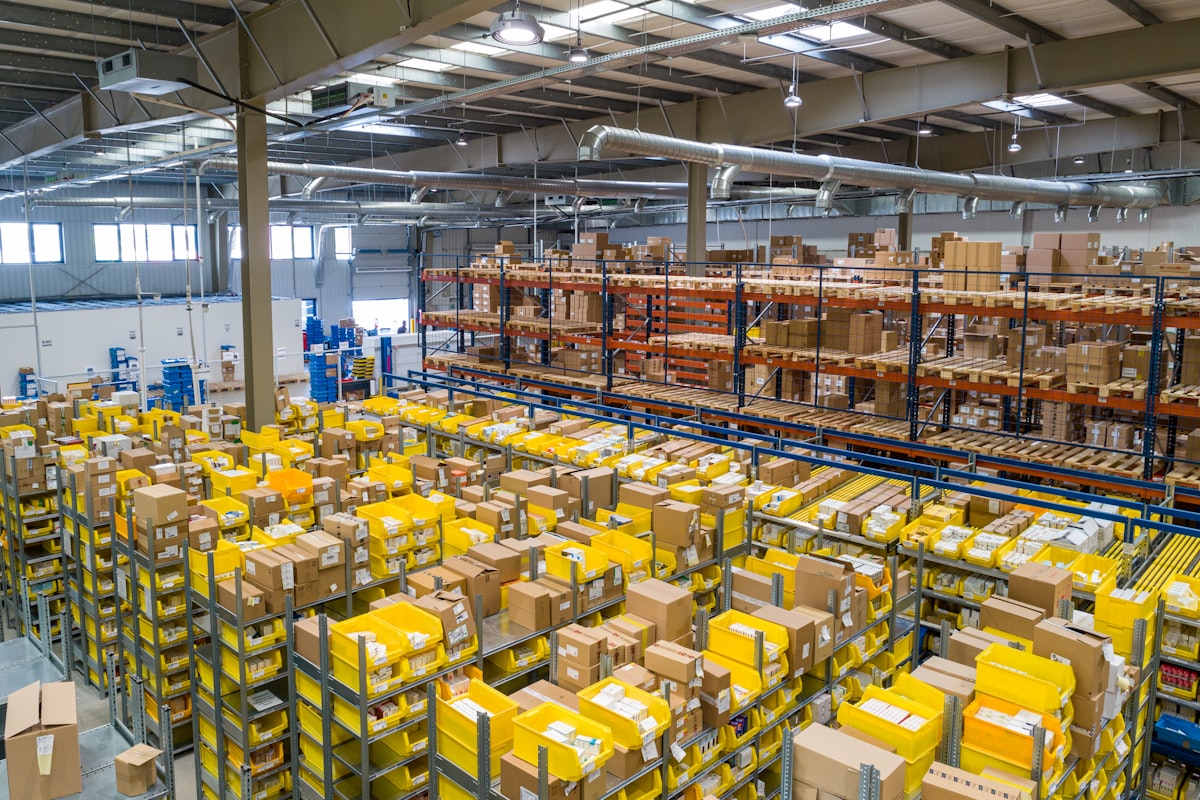
1. Master Technical Comparison: Amazon MCF vs. Traditional 3PL vs. In-House
Evaluating MCF against traditional Third-Party Logistics (3PL) providers requires analyzing base fulfillment rates, shipping speed SLAs, carrier selection flexibility, and custom unboxing controls:
| Fulfillment Vector | Amazon MCF (2026 Standard) | Traditional 3PL (e.g., ShipBob/Quiet) | In-House Warehouse Operation |
|---|---|---|---|
| Inventory Pool Integration | Unified Amazon FBA + Off-Amazon Pool | Separate stock pool dedicated to DTC | Isolated manual stock allocation |
| Delivery SLA Speeds | Standard (3-day), Expedited (2-day), Priority (1-day) | Standard Ground (3-5 days); 2-day via extra regional allocation | Carrier pick-up dependent (3-7 days) |
| Branding & Packaging | Unbranded Box/Polybag default; Zero custom inserts | Full custom unboxing, custom tape, promotional inserts | Infinite custom packaging controls |
| Carrier Control | Amazon selects carrier (5% surcharge to opt-out of AMZL) | Full multi-carrier rate shopping (UPS, FedEx, USPS, DHL) | Directly negotiated carrier contracts |
| Fuel & Peak Surcharges | 3.5% Fuel Surcharge + Q4 Peak Surcharge ($0.35-$1.00/unit) | Pass-through carrier fuel surcharges + Q4 peak fees | Direct carrier surcharge agreements |
| Recommended Software Tech Stack | Jungle Scout → | ShipStation → | Celigo iPaaS → |
2. Breakdown of the 2026 Amazon MCF Fee Restructures
Amazon restructured its MCF pricing matrix. Understanding the core rate components prevents unexpected erosion of your off-Amazon contribution margins:
A. Size Tiers and Multi-Unit Order Volume Discount Dilution
MCF pricing is determined by size tier, unit weight, order speed, and total units per order shipment. Single-unit shipments bear the highest fulfillment cost, while multi-unit orders enjoy steep per-unit discounts:
- Small Standard (Up to 16 oz): Single-unit standard 3-day delivery ranges from $7.34 to $8.66. However, in a 4+ unit order, the per-unit fulfillment cost drops down to $3.64 – $4.38 per item.
- Large Standard (1 to 3 lbs): Single-unit standard delivery ranges from $10.64 to $11.75 per unit. Multi-unit orders (4+ items) dilute this fulfillment rate down to $5.25 – $5.95 per item.
- Expedited (2-Day Delivery): Expedited 2-day delivery adds an average premium of $2.00 to $3.50+ per single-unit order compared to standard 3-day rates.
B. Surcharges & The 2026 Preferred Pricing Program
In addition to base pick, pack, and weight-based transportation fees, four specific surcharges and discount programs impact net MCF landed costs:
A mandatory 3.5% surcharge applies to all base MCF fulfillment fees. A $10.00 base MCF order incurs a total charge of $10.35 prior to storage fees.
Marketplaces like Walmart prohibit delivery by Amazon-branded vans (AMZL). Opting out of AMZL delivery in MCF settings adds a mandatory 5% fee surcharge to force fulfillment through UPS or FedEx.
High-volume sellers enrolling in the Preferred Pricing Program receive automatic fulfillment discounts and FBA fee credits based on annual multi-channel shipping volume:
- 1,200 – 7,000 units/yr: 5% fulfillment discount + $0.25 FBA fee credit per unit
- 7,001 – 13,000 units/yr: 8% fulfillment discount + $0.50 FBA fee credit per unit
- 13,001 – 30,000 units/yr: 11% fulfillment discount + $0.75 FBA fee credit per unit
- 30,001+ units/yr: 15% fulfillment discount + $1.00 FBA fee credit per unit

3. Unbranded Packaging & SIPP Compliance Rules
A historic point of friction for DTC merchants using Amazon fulfillment was receiving customer complaints about Shopify orders arriving in Amazon Prime branded boxes. Unbranded packaging (“Blank Box”) is the default standard for off-Amazon MCF fulfillment.
All boxes, polybags, packing tape, and packing slips carry zero Amazon branding. However, specific product categories and dimensions are excluded from unbranded packaging and may ship in Amazon-branded boxes or incur additional prep requirements:
Unbranded Packaging Eligibility & SIPP Rules
- Standard-size items under 18″ × 14″ × 8″
- Unit weight under 20 lbs
- Standard health, beauty, electronics, and home goods SKUs
- Products enrolled in Ships in Product Packaging (SIPP)
- Apparel and footwear categories
- Oversized items exceeding 18″ × 14″ × 8″ or 20 lbs
- Non-sortable inventory or extra-large items exceeding 56″
- Hazardous materials (Hazmat) requiring specialized handling
4. Multi-Channel ERP Pipeline Integration & SP-API Automation
To automate MCF order fulfillment without manual CSV uploads, your middleware (Celigo, ShipStation, or native Shopify apps) connects to Amazon’s Selling Partner API (SP-API) Fulfillment Outbound API.
Below is a production-ready Python script demonstrating how to programmatically submit an off-Amazon order to Amazon MCF via SP-API with unbranded packaging settings and hold-for-review capabilities:
import requests
import json
import datetime

def create_mcf_fulfillment_order(
    seller_fulfillment_order_id: str,
    displayable_order_id: str,
    displayable_order_date: str,
    displayable_order_comment: str,
    shipping_speed_category: str, # 'Standard', 'Expedited', 'Priority'
    destination_address: dict,
    items: list,
    access_token: str
):
    """
    Submits an off-Amazon order to Amazon MCF via SP-API Fulfillment Outbound Endpoint.
    Enforces Unbranded Packaging and AMZL carrier controls.
    """
    endpoint = "https://sellingpartnerapi-na.amazon.com/fba/outbound/2020-07-01/fulfillmentOrders"

    headers = {
        "x-amz-access-token": access_token,
        "Content-Type": "application/json"
    }

    payload = {
        "sellerFulfillmentOrderId": seller_fulfillment_order_id,
        "displayableOrderId": displayable_order_id,
        "displayableOrderDate": displayable_order_date,
        "displayableOrderComment": displayable_order_comment,
        "shippingSpeedCategory": shipping_speed_category,
        "destinationAddress": destination_address,
        "fulfillmentAction": "Ship", # Options: 'Ship' or 'Hold'
        "fulfillmentPolicy": "FillOrKill",
        "shipFromCountryCode": "USA",
        "notificationEmails": [destination_address.get("email")],
        # Force Unbranded Blank Box Packaging
        "featureConstraints": [
            {
                "featureName": "BLANK_BOX",
                "featureConstraint": "REQUIRED"
            }
        ],
        "items": items
    }

    response = requests.post(endpoint, headers=headers, data=json.dumps(payload))

    if response.status_code == 200:
        print(f"MCF Order Successfully Created: {seller_fulfillment_order_id}")
        return response.json()
    else:
        print(f"MCF Order Creation Failed: {response.status_code} - {response.text}")
        return None

# Example Execution for a Shopify DTC Order routed to MCF
customer_address = {
    "name": "Alex Mercer",
    "addressLine1": "742 Evergreen Terrace",
    "city": "Springfield",
    "stateOrRegion": "OR",
    "postalCode": "97477",
    "countryCode": "US",
    "email": "alex@example.com"
}

order_items = [
    {
        "sellerSku": "HOOT-PREM-HOODIE-BLK-L",
        "sellerFulfillmentOrderItemId": "ITEM-101",
        "quantity": 1,
        "perUnitPrice": {"currencyCode": "USD", "value": "65.00"}
    }
]

# Execute API Call
create_mcf_fulfillment_order(
    seller_fulfillment_order_id="SHOPIFY-ORD-99482",
    displayable_order_id="99482",
    displayable_order_date=datetime.datetime.utcnow().isoformat() + "Z",
    displayable_order_comment="Thank you for your order with Hoot Commerce!",
    shipping_speed_category="Standard",
    destination_address=customer_address,
    items=order_items,
    access_token="Atzr|IwEBI..."
)
5. Financial Decision Matrix: When to Use MCF vs. Private 3PL
Apply this mathematical model to determine whether a product line should be fulfilled via Amazon MCF or routed to a private 3PL partner:
Route via Amazon MCF When:
- You already sell the SKU on Amazon FBA and want to unify inventory pools to increase inventory turnover.
- Product weight is under 3 lbs and package dimensions fit Standard-Size parameters.
- You offer “Buy with Prime” on your Shopify store to boost landing page conversion rates.
- Off-Amazon order velocity is multi-unit (2+ items per order), unlocking heavy multi-unit MCF volume discounts.
Route via Private 3PL When:
- Products are heavy (> 3 to 5 lbs) or oversized, where private 3PL ground freight rates become significantly cheaper than MCF.
- Custom unboxing experiences, branded tape, tissue paper, or marketing flyers are critical to customer LTV.
- You sell heavily on Walmart Marketplace, where Amazon carrier vans (AMZL) must be excluded (incurring 5% MCF surcharges).
- Product categories fall under unbranded exclusions (apparel, footwear, or items > 20 lbs).
Frequently Asked Questions
Does Amazon MCF

About Robbie Shawn
Founder & Principal Systems Architect at Hoot Commerce. 15+ years engineering NetSuite/Celigo ERP pipelines, headless storefronts, and multi-channel logistics systems for $5M–$50M+ GMV brands.
Read full background →
Stop bleeding margin.
Get 15 years of operational e-commerce expertise directed at your specific bottlenecks. Book a diagnostic today.
Book a Margin Audit
About Robbie Shawn
Founder & Principal Systems Architect at Hoot Commerce. 15+ years engineering NetSuite/Celigo ERP pipelines, headless storefronts, and multi-channel logistics systems for $5M–$50M+ GMV brands.
Read full background →Stop bleeding margin.
Get 15 years of operational e-commerce expertise directed at your specific bottlenecks. Book a diagnostic today.
Book a Margin Audit